


By Haidee V. Eugenio
He’d never been to the Philippines, and he didn’t know what to expect.
From the moment we got off the plane, Phillip was in for a lot of surprises — from having his world turned upside down to having a meal at the foot of a waterfall, dancing by the rice paddies, crashing a tricycle and having his feet nibbled on by fish.
Here are some highlights of that trip:
1. ‘You turn me upside down’


Literally, our world was turned upside down and life got quirkier than it already is when we got to, well, Upside Down Museum.
This place will not only put your imagination and quirkiness to the test, but will also give you some needed workout.
Flex those arm and leg muscles a bit.
Familiar sights and experiences come with amazing twists. The living room, the kitchen, the office, the bedroom, the bathroom and the laundry room turned upside down without getting that dizzy feeling.

Perspectives shift in funny ways. The small becomes big, and vice versa. The illusions are hilarious. Don’t miss the Mirror House.
“How did you do that?” you’d ask.
No worries, the museum staff are happy to be of help. Be sure to wear comfortable clothes and shoes. Take your time.
All that fun for an equivalent of about $9.
2. Lunch at the foot of a waterfall, and a piece of Berlin Wall

Phillip didn’t think a place exists where you can have a feast at the foot of a waterfall, with your feet soaked in shallow running water.
The waterfall restaurant is the most popular and most unique feature of Villa Escudero Plantations and Resort, in the border of Laguna and Quezon Province.
It’s one of its kind in the world. Other restaurants the world over have water views and features, but this one is literally in the water and you are touching the water.
Kids get to frolic in the same water while their families get their food. My nieces and nephews almost ignored the food because of the excitement of being in a huge “swimming pool.”


You can also walk up to the waterfall for a quick splash to beat the heat. Or to take photos. Lots of them. The man-made waterfall is the first working hydroelectric plant in the country.
Filipino cuisines are spread on wooden tables adorned with fresh flowers and leaves, next to the waterfall. We sampled their offerings — pancit or rice noodle, kare-kare or Philippine stew with a thick savory peanut sauce, pork sinigang or pork in tamarind soup with vegetables, grilled tilapia fish, vegetable dishes and fresh coconut juice, among others. He got a second serving of banana cue on sticks.
But there’s so much more than the restaurant waterfall at Villa Escudero, a self-contained working coconut plantation. It was founded in the 1880s as a sugarcane plantation and was converted to a coconut plantation in the early 1900s.
Villa Escudero is a showcase of the country’s rich cultural heritage — from Philippine history to its cuisine, clothing, customs, traditions and rustic rural setting. It is a living and breathing museum. Check out the military relics on the wide lawn, too.
The staff are garbed in traditional Tagalog attire. They also get to serenade you with folk songs, with some western songs in the mix while you’re on a carabao ride on the way to the waterfall.
During weekends and holidays, the same staff and their families perform traditional Philippine dances, songs and musical instruments. They are professionally and artfully done, you’d think you’re watching a performance at the Cultural Center of the Philippines.
The private collections and world antiquities at Villa Escudero’s museum could put most public museums to shame because of how diverse and eclectic they are. I didn’t expect seeing a piece of Berlin Wall in there, but there it was.
The museum’s pink facade resembles a church, and a huge portion of the ground floor is dedicated to expensive religious relics and statues. It also showcases taxidermy. Lots of them. The second floor collections are equally intriguing.
For nature lovers, there’s a lot to experience: A river, the gardens, koi fish in ponds, the mountain views and resident bird species.

You and your family can paddle a native bamboo raft or catch fish using rod and reel on the still waters of the river. Villa Escudero has also renovated the pools area, which has something for every age level.
If you haven’t had enough of the waterfall restaurant’s spread, there are other restaurants and coffee shops to whet your appetite.
Enjoy your dessert, milk shake, ice cream or coffee while you sit back, relax and enjoy the view of the river.
Villa Escudero’s villas for overnight stays (which I have yet to try) offer different types of accommodation for different types of budget, including riverside suites complete with a large outdoor patio with a hammock and air-conditioned rooms for comfort.
3.Three-wheel ride, and crashing it

Sure, he’s been on all types of wheels, but not on a tricycle. It’s a popular mode of transportation in the Philippines, along with jeepneys.
If jeepneys are the kings of the road, well, tricycles are the kings of secondary and tertiary roads.
A tricycle is a three-wheeled public utility vehicle consisting of a motorcycle and an attached passenger’s side car.
As a first-time tricycle driver, he also tried his best to teach me how to drive it.
In one of our drives, he crashed it. Don’t worry, we’re perfectly fine and it resulted only in a minor dent on the cover of the sidecar wheel.
My parents and neighbors are probably still talking about it from time to time. After the tricycle episode, he passed up on driving the family SUV.
4. Philippine history in visual form

No time to read up on Philippine history or want a refresher course? Ayala Museum in Makati’s business district got you covered.
Check out the Diorama Experience on the second floor. The 60 dioramas “are designed to be a comprehensive visual approach to Philippine history,” from pre-contact to different colonial periods to independence.
We also took our time at the “Gold of Ancestors,” a longstanding exhibit of more than 1,000 gold objects. The exhibit is touted as a celebration of the “sophisticated cultures that existed in the Philippines before colonization in the 16th century.”
Our burning question was, “What would you do if you have that much gold?”
5. Dancing in the rice paddies


We got up early on our first morning in Laguna to check out a weekend farmer’s mobile market and a leisure walk right by the rice paddies. The tricycle ride (it wasn’t him driving by the way) was on a dusty rough road.

Rice paddies and Mount Makiling in the background were a welcome sight. From a distance, we could hear the sound of dance music and people doing the Zumba on a narrow strip of road in the middle of rice fields.
We couldn’t resist it. We did the Zumba, too, by the rice fields along with dozens of people from different walks of life. It was a different twist to a morning workout, outside the city’s frenetic pulse.
What I also find admirable about all this is that the local government pays for the Zumba instructor and all people have to do is show up in their workout attire, enjoy the sunrise, get comfortable, move their arms, hips, thighs, legs to the beat of Zumba with the help of the instructor. All free of charge to anyone on Saturday and Sunday mornings.
After the unexpected Zumba workout and more leisure walks, we stuffed ourselves with delicacies served up by farmers. We had “goto” or rice porridge with chicken, boiled egg and fried garlic, fresh soursop, wonton or dumpling, quail eggs, and fresh young coconut juice.
Using his bolo, the coconut juice seller chopped off a portion of the shell so we could use it to scoop the coconut’s white meat.
We brought home fresh fruits and vegetables and other delicacies, and stopped by a neighborhood market for some fresh fish and meat products.
6. Want some lambanog?
That neighborhood market was where Phillip discovered Philippine lambanog, a coconut wine or vodka distilled from all-natural coconut nectar.
He got not just one but two bottles, one of which contained raisins for added flavor. It wasn’t even lunch time and we were savoring the newfound drink. Isn’t that the meaning of true vacation?
7. Jollibee: The national fast food chain
We were so hungry by the time we escaped Metro Manila’s traffic, which ran from Ninoy Aquino International Airport to Alabang. So the first meal Phillip had in the Philippines was at, you guess it, Jollibee.
It’s the one along South Luzon Expressway, the first rest stop we saw after exiting the city. Jollibee serves food fast.
Plus, I missed Jollibee’s ChickenJoy, gravy sauce, palabok or rice noodle and others on its menu, so I got to have them on the first day back in the country.
Phillip was intrigued by the wasabi french fries, which was also new to me.
8. Enjoying sea life and Dr. Fish

Phillip loves the ocean and the activities it offers, from diving to swimming and stand-up paddling. But because we were on vacation, I thought maybe Manila Ocean Park right on Manila Bay would do until we get back to Guam.
It’s the first world-class marine theme park in the Philippines, packing some 3,000 cubic meters of seawater which was filtered water from Manila Bay.

It features a sizeable Oceanarium, home to some 14,000 marine creatures indigenous to the Philippines and Southeast Asia, according to the facility.
We took our time visiting the different areas. We walked through a glass tunnel that offers an underwater view of sea creatures swimming overhead.

Some other features I remember from the trip was a jellyfish exhibit, the penguin park, and some snow. On top of the Oceanarium is a hotel called Hotel H2O.
Phillip and I took pampering to a different level at the park’s Fish Spa. It took me a while to get used to having therapeutic fish feast on my toes and share a tiny pool for the feet with dozens of strangers. Guess who screamed louder than I did the first time doctor fish came into contact with our feet and legs?
Doctor fish is called other names — nibble fish, kangal fish and bonefish. It nibbles on dead and dry skin cells from your tired feet, “leaving you with rejuvenated skin and a refreshing feeling the natural way,” as advertised.
We did this while watching Manila Bay’s sunset. We stayed there longer than we were supposed to, so we missed the sea lion show.

We also almost missed all of “The Symphony” show, a performance involving fountains that shoot water 130 ft. high, helped by multimedia effects plus some songs. All I remember now is Celine Dion’s Titanic. Imagine that.
Before leaving the park, we saw some pedal cars with neon-colored LED lights. As any tourist would do, we took photos with them in the background.
9. Place your bet, and some luxuries

We tried our luck at the casinos of Resorts World Manila, which is marketed as the country’s first integrated resort, right outside the country’s main international airport. When they say it’s a one-stop, non-stop entertainment area, they’re not kidding.

It’s also by the five-star Manila Marriott Hotel, thanks to his Marriott Rewards. It’s one of the most luxurious accommodations I’ve had in my years of travel.
The room and the rooftop pool overlook a golf course. Up there, you see the different faces of Metro Manila — from tall skyscrapers to slums, from greenery to not-so-pleasant views. It’s always an interesting case study.
10. ‘Foot for the Gods’
SM Mall of Asia, among the largest malls in Asia and the world, is a nice stop if at least to cool off after a city tour. It’s a retail therapy capital, but we spent most of our “malling” time checking out restaurants.
And then we saw the sign, “Foot for the Gods.” Our feet led us to this relaxation and therapeutic spa, giving our tired feet the deep tissue massage they need after days of walking.
There were no cubicles, it was dim, and most of the clients at the time were males — some in their business suit and some in their casual wear. The silence, however, was broken only by Phillip’s shriek followed by laughter, after his foot got a real deep massage he said he’s never had before. We’ll definitely go back to the place.
11. If these walls could talk

It’s not everyday you get to walk on cobbled streets in the historic Walled City of Intramuros, a 64-hectare stone citadel built by the Spanish colonial government in 1571 to protect the city from foreign invasions.
It’s among the most intact, most visited and most photographed Spanish-era structure in the country.
We explored the more than 400-year-old San Agustin Church, a UNESCO heritage site. The ancient building survived World War II, earthquakes and calamities, and is the oldest stone church currently standing in the Philippines.
We also checked out the adjacent San Agustin Museum, which has a wide selection of religious and other cultural artifacts dating hundreds of years.
Its large stairs reminded us of the structures used in the Harry Potter movie series.
12. Chilling out on the rooftop
We spent considerable time hanging out at my parents’ house rooftop, which has good views of mountain ranges, trees, streets, tricycles and other vehicles passing, buildings, and houses.
It’s where stories and laughter were shared, food and drinks consumed, and relaxing and dozing off was allowed. Until you fell off the hammock. That caught us by surprise.


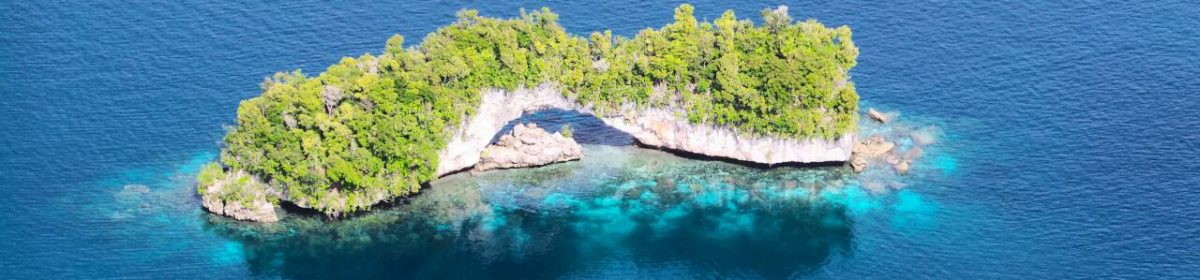
 No Palau visit is complete without experiencing any or many of the 250 to 300 unique island formations collectively known as the Rock Islands. It’s the crown jewel of the island republic’s tourism.
 From this high vantage point, you get to cover a vast area from an entirely different angle. The limestone and coral uprises are undoubtedly a mesmerizing sight to behold so it’s no wonder they were listed as a UNESCO World Heritage Site. They’re so beautiful, and I told myself how lucky I was to be even in their presence.
 Heed the pilot’s warning to hold your camera tight, unless you’re ready to lose it to the vast ocean down below.
 Jellyfish Lake used to be a part of most tours going to the Rock Islands. For wondrous reason. You get to swim with about 20 million harmless jellyfish in one lake.


 My adventures were not all up in the air. I took a long drive from Koror to Babeldaob, connected by the
  It’s the largest and most photographed waterfall in Palau. It flows from Palau’s tallest peak, the nearly 800-feet high Mount Ngerchelchuus.
  A clunky monorail has found its way to modern times, in the middle of Palau’s jungle. You can access the Ngardmau Waterfall on foot or by this monorail I’m talking about.
 From Ngardmau Waterfall, continue driving along a scenic route for another 20 minutes to reach Palau’s National Capital Complex.
  A friend from Saipan, Nace, treated me to a Pink Mustang rental car. I only did what any tourist does.
 What better way to cap a sun-drenched day of hiking than relaxing and hanging out at beach bars and lakefront properties?
  They say if eating (and some drinking), sleeping and diving are the only three things you want to do on your vacation, a dive charter on a liveaboard is perfect for you. My vacation wasn’t perfect but it was close enough.
 My trip to Palau was a short one but it was remarkable because of its natural beauty and because of the warmth of the people and the joy of reconnecting with friends I haven’t seen in years and are now in Palau.


 She helped me buy a one-way ticket to San Francisco in one of those vending machines at a CalTrain station nearest Stanford University where she works. When my cousin left, it didn’t take long for the train to arrive at the Palo Alto station.
 Snapping in and out of my nostalgia aboard CalTrain, the names of the places where we made stops were no longer strange to my ear every time the driver announces it — San Carlos, Hillsdale, San Mateo, Burlingame, and San Bruno.
 In less than an hour, the train was at its last stop at the San Francisco station. The train arrived earlier than I expected, so I started reading a free newspaper while waiting for my friend to pick me up. The headline in the San Francisco Examiner was about a police chief defending his men’s actions during a shootout that left one man dead.
 A man who just parked his car offered to take our photos together. He suggested checking out the nearby Cliff House which, as its name suggests, also has a spectacular view of the sea besides offering hearty meals. It turned out that the man who took our photos was a manager at the restaurant. We got a free serving of their specialty pastry! You never know.
 The three of us were off to the de Young Fin
 If you look
 54. Zip Line Guam. Feel the adrenaline rush as you zoom over treetops, enjoying Guam’s stunning forest views, sparkling Tumon Bay and beyond from an entirely different perspective. With Zip Guam’s opening, residents and visitors to Guam can now add “heading to the skies” to their must-do list, especially since most of the island’s tourist activities have to do with beautiful beaches, walking tours of historic and cultural sites, nature trails, restaurant and bar-hopping, and shopping.
 After getting considerable pep talk from friends near and far, I finally had my first zip line experience, courtesy of Zip Guam. It was supposed to be one of those new things “to try” right around your birthday. It’s the closest thing to flying, with especially fitted safety harnesses, helmet, and
 59. Magellan Monument. And since we’re on the topic of Magellan, an obelisk monument was built at the center of Umatac Bay within a park in honor of Magellan’s first landing in Guam in 1521. The monument, bearing the inscription, “Magellan landed here,” overlooks a scenic view of Umatac Bay’s black rocky coastline.
 61. Kamalen Park. Near the Merizo Bell Tower is the Santa Marian Kamalen Park, in honor of the island’s patroness saint. There is still debate on the original statue but legend has it that two crabs with lit candles on their backs guided the patroness ashore more than 300 years ago. The park has a replica of the patroness saint, while the original is housed in the Dulce Nombre de Maria Cathedral-Basilica in Hagatna.
 65. Lost pond. From Hilaan Beach, a trail leads toward the cliffs and a freshwater pond, or hagoi. It’s worth any Valentine’s Day hike with your loved one to find what others call the “lost” pond. Look for the pink and orange ribbons tied to trees along the trail leading to the pond, so that you won’t get lost. While we didn’t get to see the nearby latte stones of the ancient village of Hilaan on that particular hike, we will go back for sure.
